SHOP NOTE · 2026-07-28
Glue-in vs screw-in arrow points
Newtop Shop
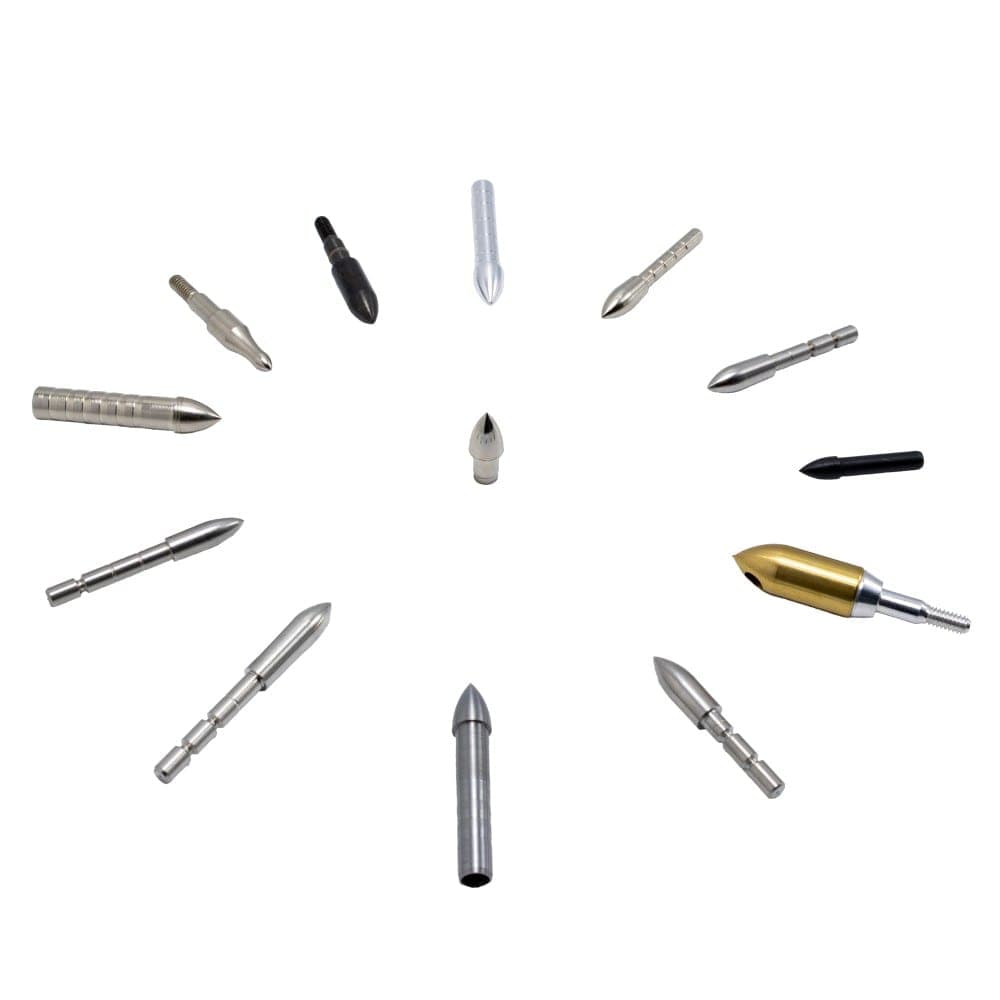
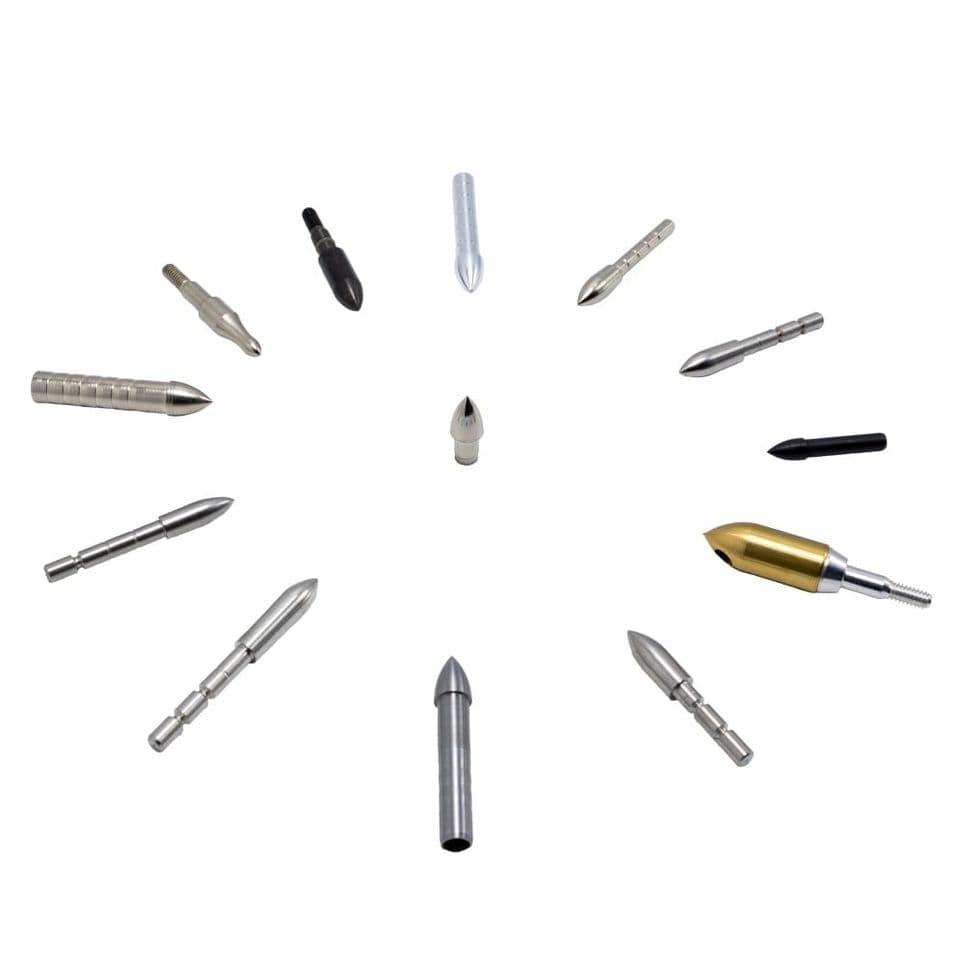
An arrow point does two jobs: it sets the front-of-center weight that stabilizes the arrow, and it takes the impact. Get the weight and concentricity right and a set groups; get them wrong and it scatters. Here is the difference between the two mounting styles and how we turn them.
Glue-in: lighter, cleaner, permanent
A glue-in point bonds directly into the shaft with a ringed or knurled shank that holds the adhesive. It runs concentric because there is no thread interface to stack tolerance, and it saves the weight of an insert. The trade is that it is permanent: to change point weight you replace the arrow.
Screw-in: swappable, insert-dependent
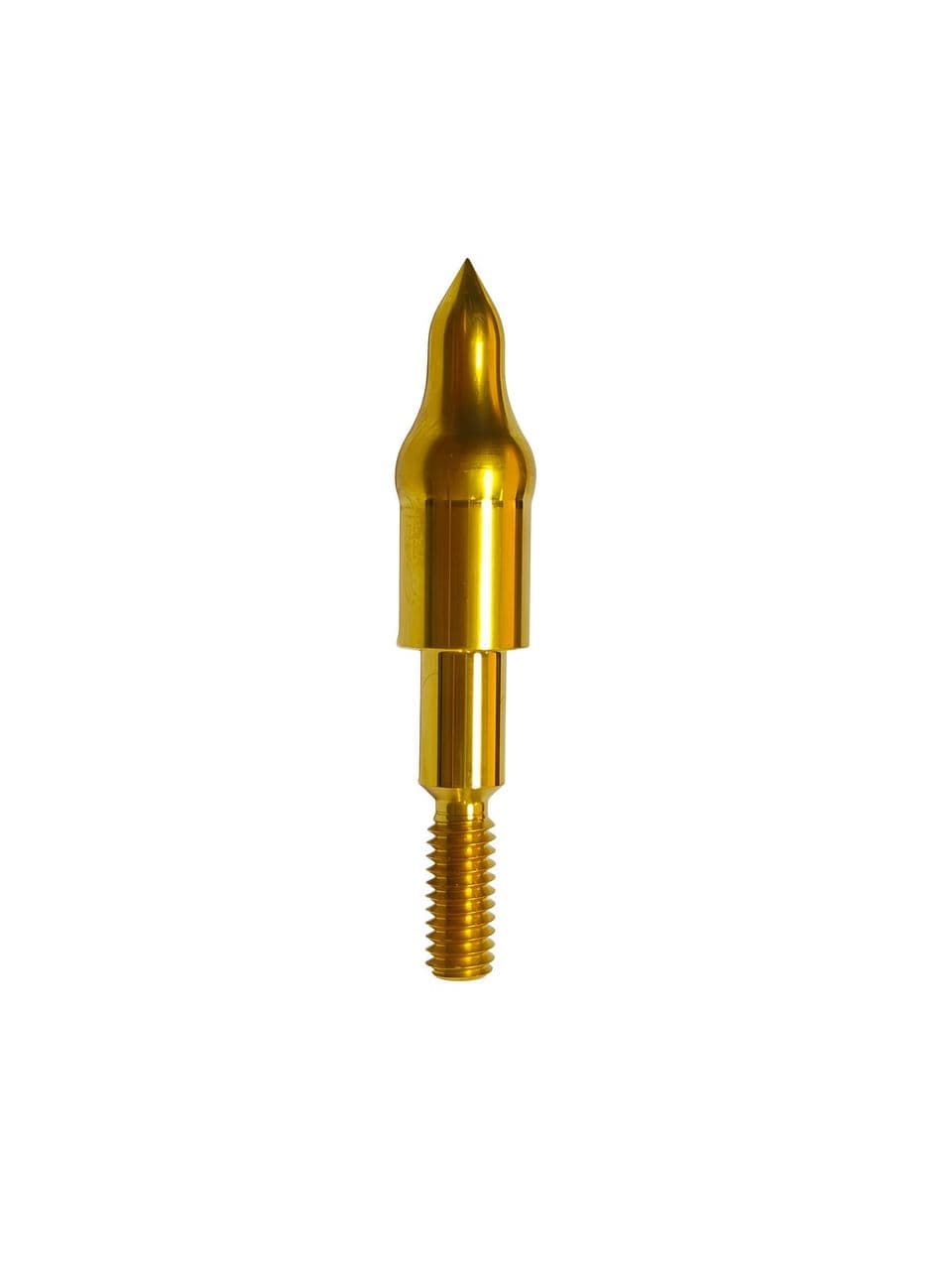
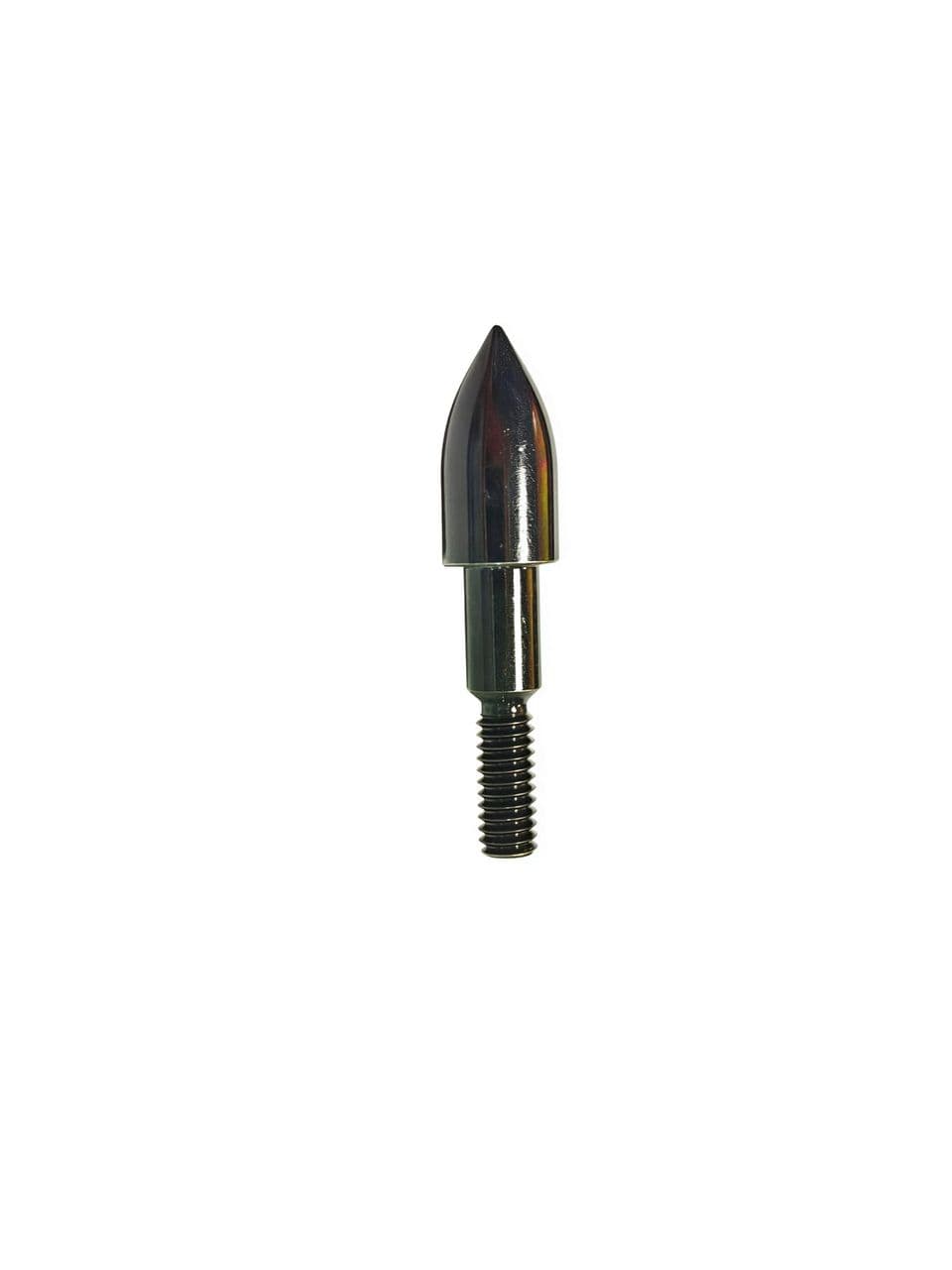
A screw-in point threads into an insert bonded in the shaft, so one arrow takes points of different weights and styles: target, field, or broadhead. Concentricity now depends on the insert and the thread running true, which is why we hold the stud and shoulder tight. Convenience costs a little weight and one more interface.
Weight, profile, and material
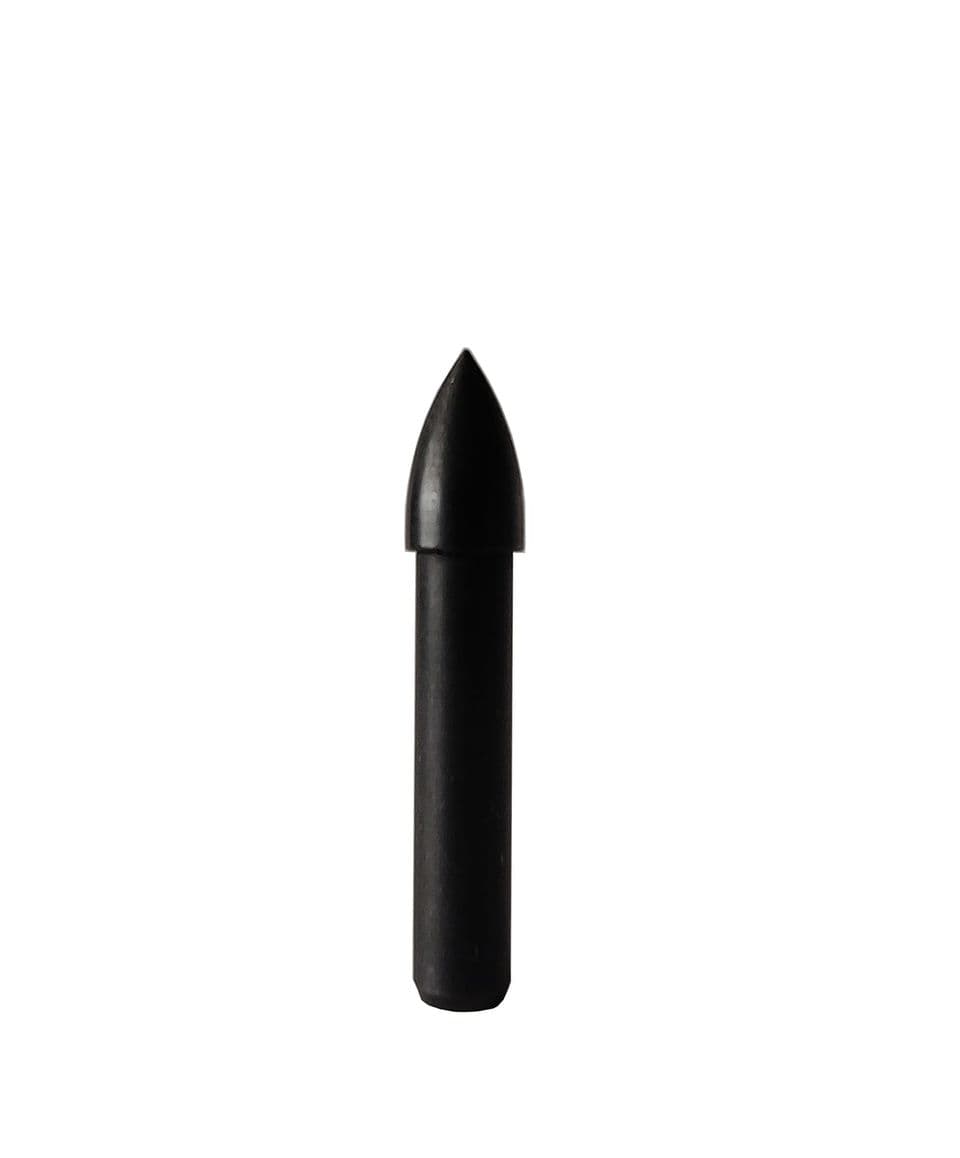
Weight is set by length and bore, so a matched set has to be turned in one run to group. Profile (bullet, ogive, field taper) changes how the point penetrates and pulls out. Brass gives weight in a short point; stainless gives a harder, more wear-resistant tip. We turn all of them, in the shaft diameters you run.
Target points we machine
Request for quote
Machining parts like these?
Reviewed by an engineer within 1 business day. AL · SS · brass · titanium · to ±0.002mm.
Request a quoteSpec it and we cut it
Tell us shaft ID, grain weight, glue-in or screw-in, and material. We turn the point to weight and hold the concentricity that makes a set group. Send the numbers and we quote it.
Request for quote
Need a part like this machined?
Reviewed by an engineer within 1 business day. AL · SS · brass · titanium · to ±0.002mm.
Request a quote